Executive Summary
Enteric methane represents 2 to 12% of cattle gross energy intake, a massive efficiency loss across 1.5 billion head globally. Current solutions range from vaccines (promising but early-stage), bromoform/Asparagopsis seaweed (up to 95% reduction but supply-chain constrained), to DSM's Bovaer® 3-NOP (25 to 35% reduction, commercially available but limited to intensive systems). Scalable solutions need to deliver greater than 80% efficacy, greater than 5% productivity gain, multi-month duration, and cost below US$10 per head per year to achieve adoption beyond feedlots into extensive grazing systems.
How Much Energy Do We Lose to Methane?
Across multiple studies and meta-analyses, enteric methane consistently represents about 2 to 12% of gross energy intake (GEI) in cattle, depending on diet and intake level. That energy loss reduces feed efficiency and depresses potential gains in growth and milk production. With roughly 1.5 billion cattle globally, this is an enormous pool of wasted calories that could instead support growth, milk production, reproduction, or maintenance.[1][3]
Higher-fibre, lower-digestibility diets push these losses toward the upper end of that range, while more digestible rations can bring them down, but rarely below a few percent of GEI. Reducing methanogenesis therefore delivers a double dividend: it cuts greenhouse gas emissions while improving feed conversion efficiency. That efficiency gain cascades through the system as better animal health, reduced land and water use, lower feed demand, and ultimately lower CO2 emissions per kilogram of protein produced.[3][4][8]
A Very Short History
Methane was first identified in 1776, and enteric methane has been studied systematically since at least the late 1960s. Early work showed that highly toxic halogenated hydrocarbons such as chloroform could inhibit methanogenesis. They were chemically effective, but completely unacceptable from a food safety and animal welfare standpoint.[6]
A major inflection point came in 1999, when research funded by Twynam and conducted by CSIRO developed one of the first vaccines targeting rumen methanogens. The vaccine achieved around 15% methane reduction but did not deliver clear productivity gains, falling short of commercial viability. That outcome still frames today's challenge: modest emissions reductions without an on-farm economic win rarely scale.[6]
What Actually Matters for Scalable Solutions
From an investor's perspective, an enteric methane solution has to clear both biological and commercial bars. We use five simple filters:
Efficacy: We look for greater than 80% reduction in methane from the treated fraction of the herd. Most current additives deliver 20 to 40% on average, which is meaningful but rarely transformative on its own.[8]
Yield: Productivity gains must be material. Solutions that rely solely on carbon credits tend not to scale. We target greater than 5% improvements in weight gain or milk yield to drive organic adoption.
Duration: Effects must persist for months, not days or weeks. A minimum three-month duration is needed to reach grazing systems at global scale rather than just intensively managed feedlots.
Price: The cost-benefit has to be unambiguous at the farm gate. We target COGS below US$10 per head per year for broad adoption, with upside shared between farmers, solution providers, and downstream supply chains.
Delivery: The product must fit existing labour patterns. Vaccines and boluses require mustering and skilled handling. Feed and water-based approaches are easier to integrate in feedlots and dairies but pose dosing and compliance challenges.
Technologies that solve these problems rewire rumen metabolism toward more efficient hydrogen and carbon sinks and create a true productivity technology.
Solutions on the Table: Vaccines
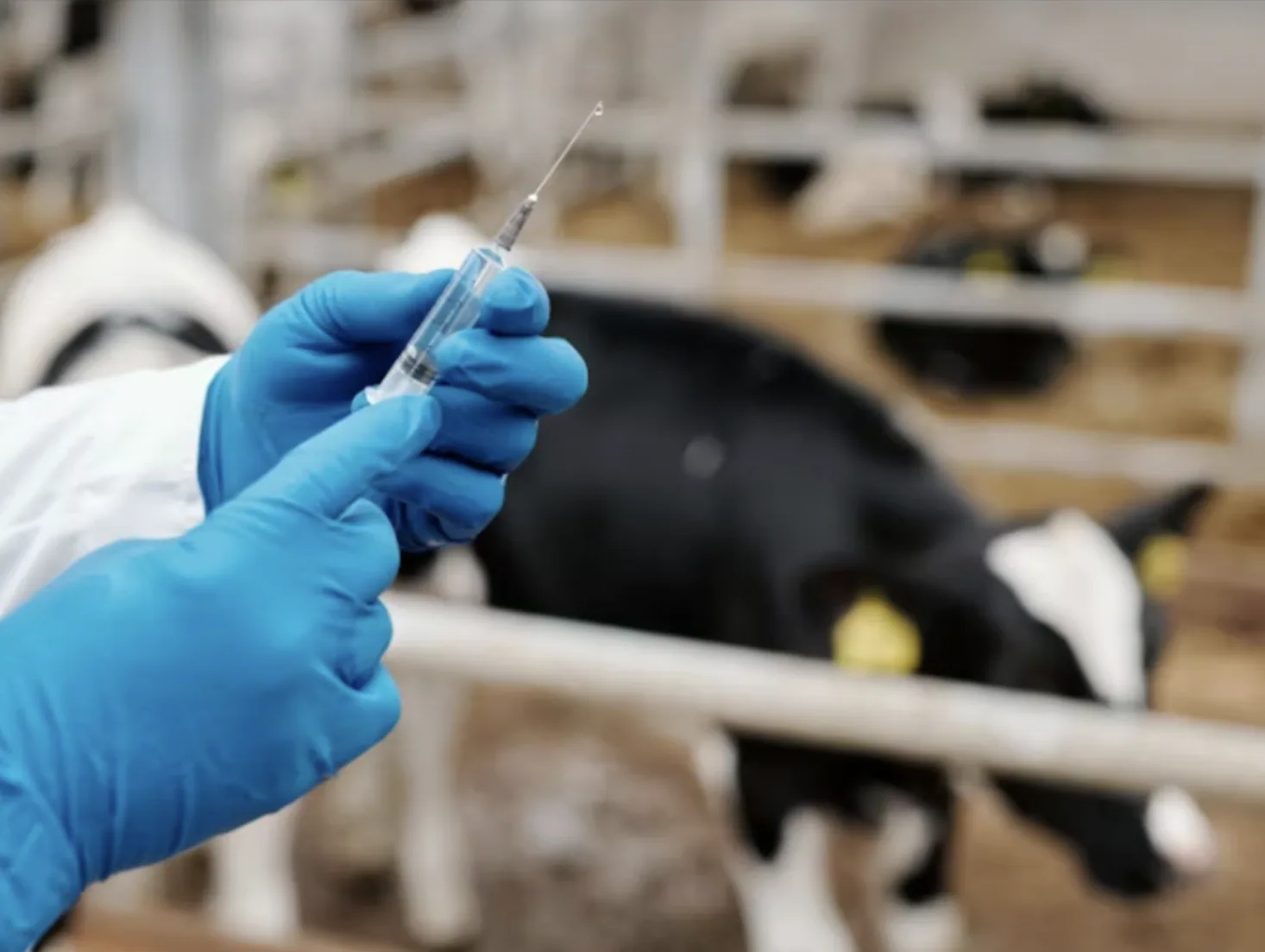
Vaccines aim to stimulate the animal's immune system to produce antibodies that enter the rumen via saliva and bind to methanogens, blocking key enzymes or surface proteins involved in methanogenesis. Most candidates to date target only one or a few methanogen species, despite the ecological diversity of methanogens in the rumen.[6]
Early vaccine work (e.g. CSIRO/Twynam) showed proof of biology but achieved only modest methane reductions and no consistent productivity uplift. Newer startups, including Arkea Bio and Pasture Bio, are pursuing broader antigen coverage, improved adjuvants, and better understanding of rumen community dynamics to boost efficacy and duration. As investors, we view vaccines as a potentially powerful set-and-forget platform if they can deliver multi-month suppression and measurable feed efficiency gains at scale.[8]
Source: Unsplash
Solutions on the Table: Bromoform and Asparagopsis
Bromoform (CHBr3) is a halogenated compound naturally produced by certain red seaweeds, notably Asparagopsis species. It inhibits methanogenesis by blocking methyl-coenzyme M reductase (MCR), a key enzyme in the final step of methane formation in methanogens.[6]
In vitro and in vivo studies have reported very high abatement potential. Whole Asparagopsis seaweed included at low levels in the diet has been shown to reduce methane by up to roughly 95% in some trials. Equivalent doses of purified bromoform alone deliver more moderate reductions. This suggests that additional bioactive compounds in the seaweed contribute significantly to total mitigation beyond bromoform itself.[9][10]
The commercial bottlenecks today are:
- Stability: Maintaining bromoform content and bioactivity through harvesting, processing, storage, and feed manufacture.
- Palatability and intake: High inclusion rates can depress dry matter intake. Careful formulation, dose optimisation, and adaptation periods are needed to avoid performance penalties.
- Supply chain: Scaling seaweed cultivation or synthetic/syn-bio routes to reliably supply large ruminant populations at acceptable cost.
Approaches in the market range from whole seaweed products (e.g. Asparagopsis-based feeds), to synthetic bromoform, to synthetic biology platforms producing halogenated methane inhibitors.[9][10]

Source: seastock
Solutions on the Table: DSM Bovaer® (3-NOP)
Bovaer® (3-nitrooxypropanol, 3-NOP) is currently the most advanced commercial enteric methane inhibitor, with regulatory approvals across multiple regions and growing adoption in confined dairy and beef systems. Like bromoform, 3-NOP inhibits MCR, but it is rapidly broken down in the rumen and does not accumulate in milk or meat at concerning levels.[11]
Meta-analyses and implementation reports show that 3-NOP typically reduces methane emissions by around 25 to 35% on average at recommended doses, with reported ranges from roughly 13% to over 60% depending on dose, diet, and system. A recent Danish implementation study suggests adopting an average reduction of about 27% in national inventories at a dose of 60 mg 3-NOP/kg dry matter intake, while commercial farm data show reductions of roughly 30 to 33%. Some trials also report improvements in feed efficiency as hydrogen is redirected toward other fermentation products, although effects on milk yield and intake can vary.[11][12]
The main scalability constraint is operational. Bovaer requires continuous inclusion in the ration, which is straightforward in TMR-based dairy and feedlots but difficult in extensive grazing systems where daily supplementation is impractical. This makes 3-NOP a strong near-term solution for intensive systems, but only a partial answer for the global cattle herd.[8]

Feed additive (3-NOP; DSM) marketed as Bovaer®. Adapted from Gadzama (2024), originally adapted from Mulhollem (2020).
Where the Opportunity Really Is
Enteric methane is not just a climate problem. It is an energy efficiency problem in disguise. The global cattle industry is effectively burning 2 to 12% of its feed energy budget into the atmosphere as methane, and any technology that can permanently redirect that energy into productive pathways will create value long before carbon markets are fully mature.[1][3]
For Twynam, the most compelling solutions will:
- Permanently or semi-permanently alter rumen fermentation away from methane and toward alternative hydrogen sinks (e.g. acetogenesis, propionate formation, biohydrogen capture).
- Deliver robust, on-farm productivity gains that underwrite adoption without relying solely on subsidy or carbon price assumptions.
- Achieve months-long durability per intervention and low-touch delivery so that extensive grazing systems, not just feedlots, become addressable.
- Fit within a COGS envelope that leaves room for margin and for value sharing with farmers and downstream supply chains.
The technologies that win will be those that turn "wasted methane" into a structural efficiency gain.
Key Sources
- Anantasook & Wanapat 2018, "Enteric methane emissions, energy partitioning, and efficiency of metabolizable energy utilization in beef cattle."
- Evangelista et al. 2024, "Enteric Methane Emission in Livestock Sector."
- Purba et al. 2025, "Meta‑Analysis of Dietary Interventions for Enteric Methane."
- Johnson & Johnson (1995), summarized in Xie et al. 2025.
- Enteric Methane: What Actually Works — internal reference document.
- Rumen methanogen diversity and inhibition strategies.
- Xie et al. 2025, "Mitigating enteric methane emissions: An overview."
- Xie et al. 2025 (supplementary analysis).
- CH4 Global — Asparagopsis vs bromoform efficacy study.
- PR Newswire — Asparagopsis seaweed methane reduction findings.
- Lund et al. 2024, "Implementation of the use of the enteric methane mitigating feed additive Bovaer."
- FEFAC — Kebreab et al. meta‑analysis, Bovaer® note.
- MLA — Bovaer implementation report.
- Visualizing Energy — Global anthropogenic methane emissions 1970–2022.
- The Breakthrough Institute — Livestock greenhouse gas emissions.