Executive Summary
Asia, with 4.7 billion people, accounts for 77% of global emission increases since 1990. East Asia has tripled emissions while Europe halved theirs. Indonesia and India, with 1.7bn people combined, have less than 10% AC penetration versus 90% in the US. A 20% increase in AC saturation would exceed EU and US combined capacity. Doubling AC efficiency by 2050 could eliminate the need for 1,300GW of generation—equivalent to all coal capacity in China and India.
Asia is not to be ignored in our climate race. Not to be forgotten, greenhouse gases affect everyone, whether from Australia, China, or Timbuktu.
Here are some fast facts:
- With 4.7 billion people in 2022, Asia is by far the world's most populous region.
- Asia is the largest contributor to global emissions, accounting for a staggering 77% of the net increase in overall emissions since 1990, according to the latest IPCC Report.
- East Asia has more than tripled its emissions compared to 1990, while Europe halved theirs.
Although the gold and silver 'prize' for most historical cumulative emissions goes to North America and Europe, respectively, the future of emissions lies in Asia.
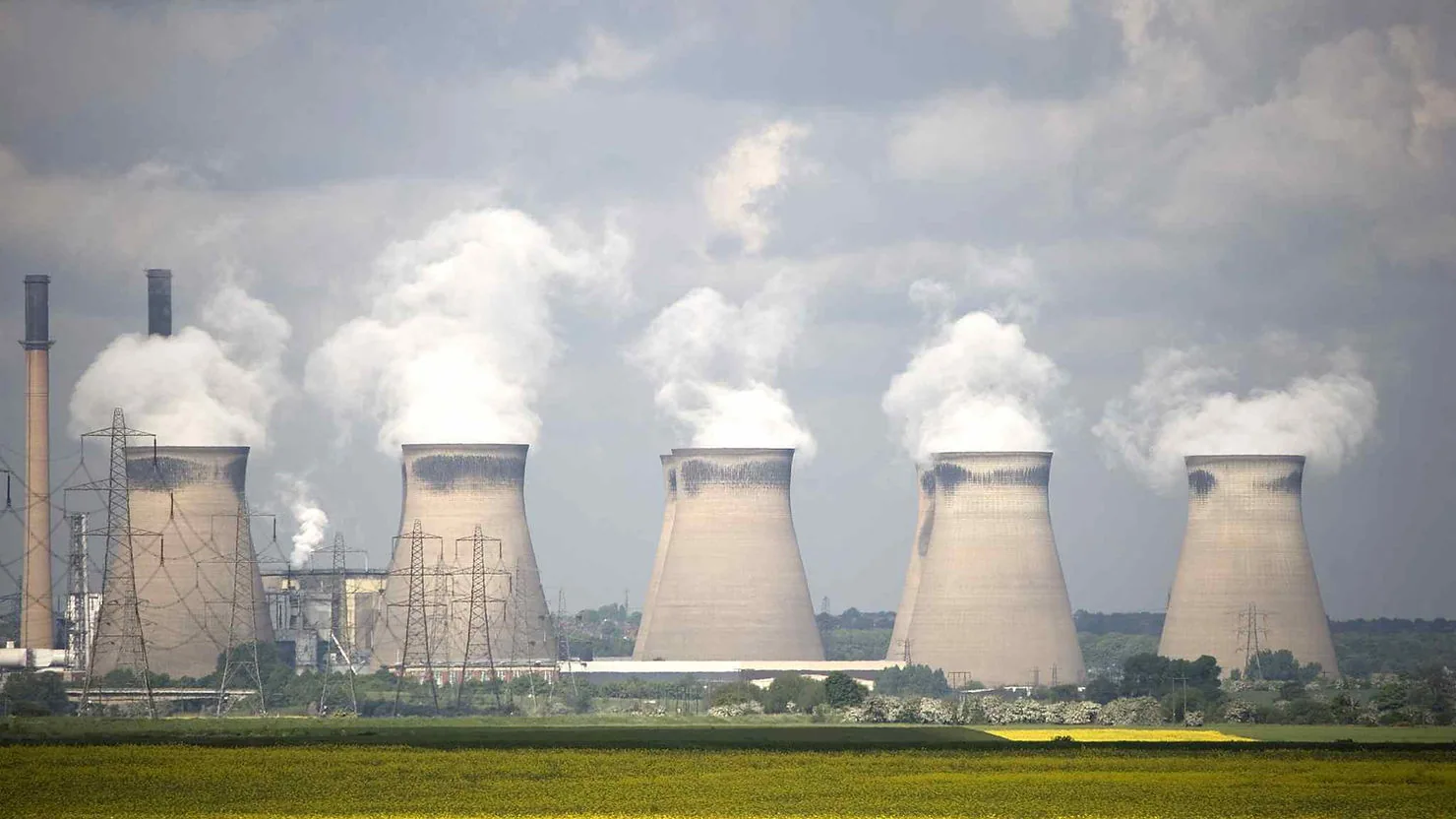
Source: CGTN
Cooling in Asia
Instead of discussing macroeconomic drivers, let's look at the example of cooling a growing population – a particularly 'hot' topic in a warming world as the IEA expects demand for air conditioning to triple by 2050.
We'll look at Indonesia and India specifically. These economies have a combined total population of 1.7bn, and the IMF predicts them to be the two fastest-growing economies over the next five years.
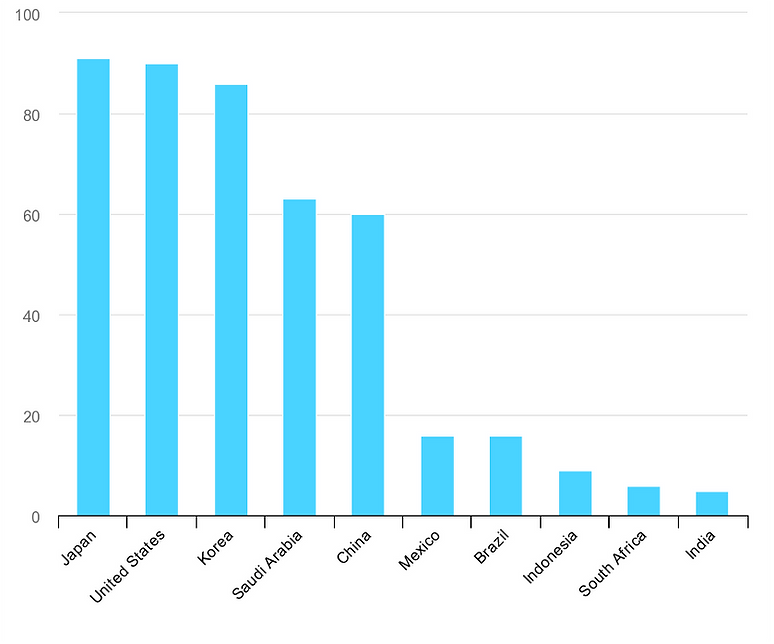
Percentage of households equipped with AC in selected countries, 2018 (Source: IEA)
In both countries, less than 10% of the population has an A/C unit. Compare that with over 90% in the United States.
Counting both commercial and residential units in 2016, the IEA estimated that the United States had 374 million units installed compared to 39 million units in Indonesia and India combined.
This means the US had almost 10x more cooling units despite having one-fifth of the population of India and Indonesia combined.
If saturation of A/C per capita were to increase by just 20% in our example Asian economies, the installed capacity would be more than the European Union and the United States combined.
This represents much more power usage and a lot more emissions without 100% renewable power. Cooling and refrigeration already account for over 10% of greenhouse gas emissions.
Why is this a decarbonisation opportunity? Further estimates suggest that doubling the energy efficiency of air conditioning by 2050 would reduce the need for 1,300 gigawatts of additional electricity generation capacity to meet peak demand – the equivalent of all the coal-fired power generation capacity in China and India in 2018.
So What - Asia's Emissions
When we evaluate future technologies, such as cooling, we must consider their use and adoption in Asian contexts as emissions continue to grow in line with population and economies. In the future of decarbonisation, Asia is a critical priority for investment and innovation.
This data underscores the urgent need and opportunity to curb emissions today, especially in Asia, by leapfrogging high-emitting technologies for more sustainable ones. Just as India 'leapfrogged' landline telephones and went straight for mobile, these regions need to skip fossil fuels and dirty industry and reach for renewables.
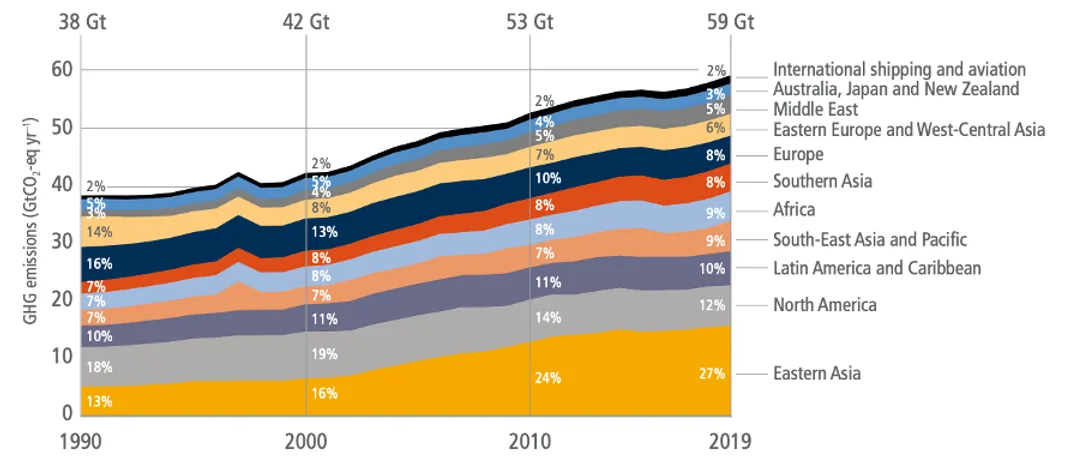
Global net anthropogenic GHG emissions by region – 1990-2019 (Source: IPCC)
At Twynam, Asia is a major focus for the Earth Fund. Investing for a better Earth means including the whole planet on the ride.